What Time Of Day Is Best For Orlando Helicopter Photos?
Late afternoon and sunset deliver the best light for Orlando helicopter photos, with night flights as the lit-skyline alternative. A practical timing guide for photographers.
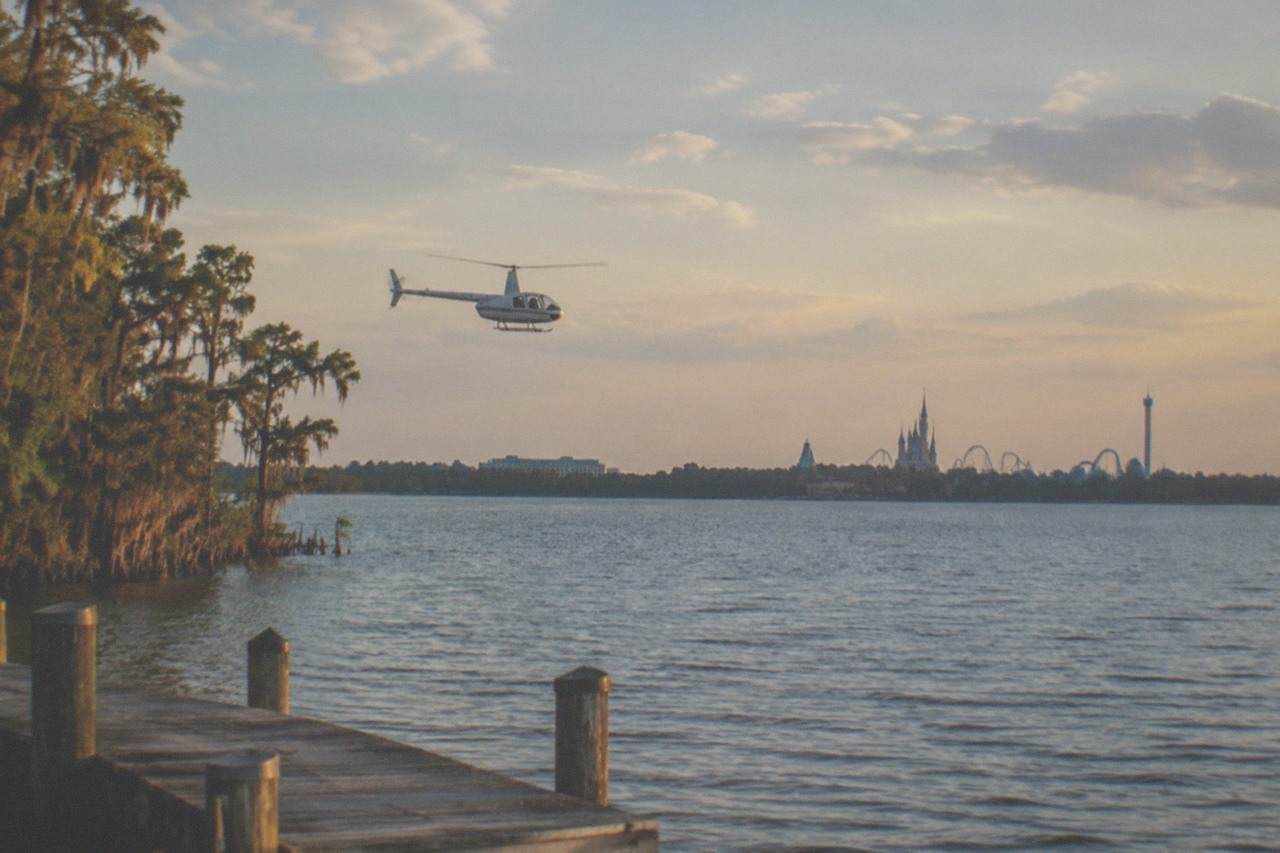
Late afternoon and sunset win for photography light, and the reason is simple: low sun puts texture and color on everything below, while midday sun flattens the theme-park corridor into haze. If your goal is frames rather than just a ride, the timing decision matters as much as the route. This guide walks through the light, the seasons, the storm windows and the practical rules that decide whether your camera work pays off.
The short version, drawn from the site's timing research: book a late-afternoon or sunset slot in the dry season between November and April if you want the classic warm-light shots. Book a night flight if your subject is the lit skyline. In summer, book mornings between roughly 9:30 and 11am, because afternoon thunderstorms in the 2-8pm window scrap more flights than any other factor. Each of those choices trades something, and the sections below spell out the trade-offs.
One framing note before the timing talk, because it shapes what your photos can actually contain. A permanent FAA flight restriction, published as FDC NOTAM 4/3634, bars aircraft from a 3 nautical-mile radius over Walt Disney World property from the surface to 3,000 feet, so no tour flies directly over the Disney parks. Your photos will be skyline and corridor views from outside that zone, plus, on longer routes, the downtown Orlando skyline, which sits outside the restriction entirely. The FAA's official TFR detail page gives the exact geometry if you want to plan compositions around it, and this explainer on the Disney no-fly zone covers the background. Universal Orlando is not inside the restricted zone, which is why some routes treat it differently.
What Time Of Day Is Best For Orlando Helicopter Photos?
Late afternoon into sunset is the best time of day for Orlando helicopter photos, and it is not close. Low, warm sun gives the lakes, resort towers and theme-park corridor depth and color that flat midday light destroys. Night flights are the strong alternative when your subject is the lit skyline rather than the landscape. In summer, shift to morning slots to dodge the storm window.
The research on Central Florida flight conditions is consistent on this point: sunset and late-afternoon flights are rated best for photography light. The sun dropping toward the horizon throws long shadows across the water, warms the concrete and rooftops of the resort corridor, and gives the haze a golden edge instead of the milky white you get at noon. Photographers call this the golden hour, and from a helicopter over the Kissimmee lake chain it does real work.
Midday is the worst of the three options for a specific, physical reason. Florida humidity builds a haze layer that high sun lights from above, washing out contrast across the whole frame. You can shoot at noon and get usable documentary photos, but the depth is gone and the horizon melts. If midday is your only slot because of a packed park schedule, treat the flight as scouting rather than as the shoot.
Morning sits in the middle. The air is cleaner before the afternoon convection kicks off, and early light has a cool, clear quality some photographers prefer for water and greenery. The catch is that morning light is gone within a couple of hours of takeoff, so your window is narrower than the afternoon's long slide into sunset. For a deeper comparison of morning versus afternoon slots for the ride itself, not just the photos, see the guide to the best time of day for a helicopter tour, which covers comfort and weather reliability alongside the light.
Here is how the four slots stack up against each other for a camera-carrying rider:
| Slot | Light quality | Weather risk | Best subject |
|---|---|---|---|
| Morning (9:30-11am) | Clean, cool, calm water reflections | Low, even in summer | Lakes, wetlands, wildlife |
| Midday | Flat, hazy, low contrast | Low | Scouting and documentary frames |
| Late afternoon / sunset | Warm, textured, golden haze edge | Low in dry season, high in summer | Corridor, resorts, lakes |
| Night | Lit skyline, no natural light | Low | Theme-park lights, downtown grid |
If you are choosing a specific product for a photo mission, three stand out for different reasons.
The after-hours flight is the night-photography pick, the narrated day flight gives you the longest well-guided daylight exposure to the corridor, and the City Lights and Fireworks Premier tour is the premium format option, timed to the 8:30pm Epcot fireworks window with a digital photo media package built into the price. Weigh them against the light you actually want, not just the price.
Why Sunset Light Wins Over Every Other Slot
Sunset light wins because low sun angle creates the three things aerial photos need: long shadows that reveal terrain texture, warm color that separates water from land, and a sky gradient that gives every frame a natural backdrop. Midday delivers none of these, and morning delivers them for a shorter window.
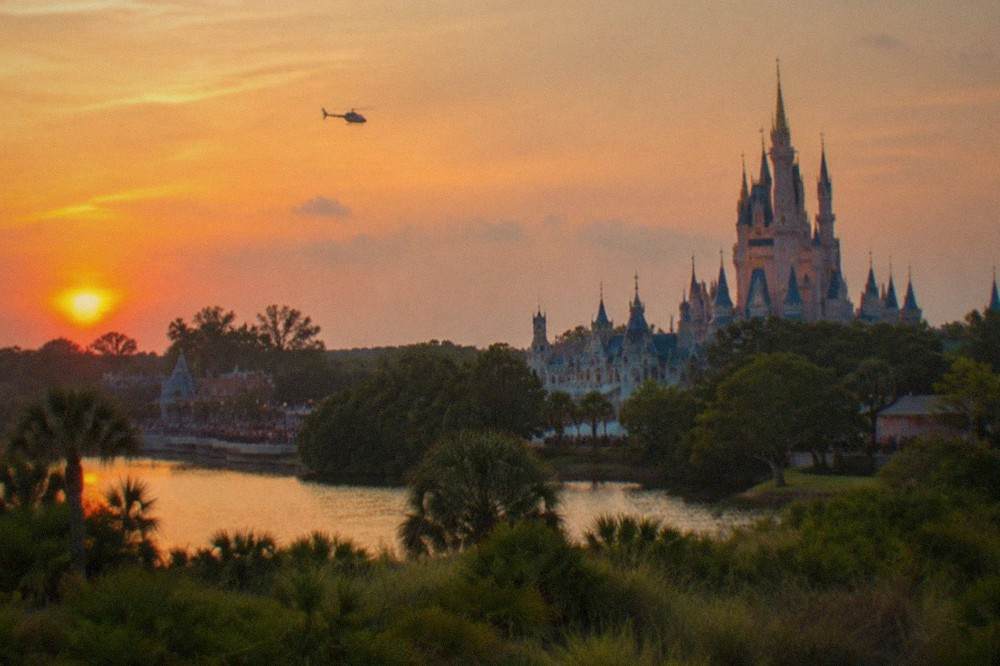
Think about what is actually below you on a Kissimmee departure. The route crosses a chain of shallow lakes, cypress wetlands, resort architecture and the low-slung sprawl of the US-192 corridor. At 2pm, all of that reads as a bright, flat mosaic. At 6:30pm in February, the lakes turn into mirrors, the west-facing walls of the resort towers catch fire, and the tree lines throw shadow that gives the frame a sense of dimension. The difference is not subtle, and it is why operators themselves point photographers at the late slots.
There is a practical planning wrinkle: sunset moves. Central Florida sunset swings from roughly 5:30pm in December to past 8pm in June, and the useful golden light starts 45 to 60 minutes before that. So "book the sunset flight" means checking the actual sunset time for your travel week and working backward from it, not just grabbing the last slot of the day. In winter, the last departure may already be in full dark. In summer, a 6pm flight may still be in harsh light.
The other wrinkle is demand. Sunset slots are the ones everyone else wants too, especially on weekends in the dry season. Book early in your trip window rather than on the last day, so a weather scrub does not end your only chance. If the flight does get weathered out, operators in this market commonly offer rescheduling or refunds for weather cancellations, though exact policies vary, so read your specific listing's terms. The site's guide to the weather and cancellation policies for Orlando helicopter tours covers what to expect and how to protect the booking.
If the sunset slot on your date is gone or the price is steep, a night flight is the honest fallback for a photo mission, and for some subjects it is not a fallback at all.
What Night Flights Give A Photographer
Night flights give you the lit theme-park skyline, the orange glow of the corridor and downtown Orlando's grid of lights, subjects that do not exist in daylight at all. The trade is technical: you are shooting through glass, in low light, from a moving aircraft, so expectations need to match the gear.
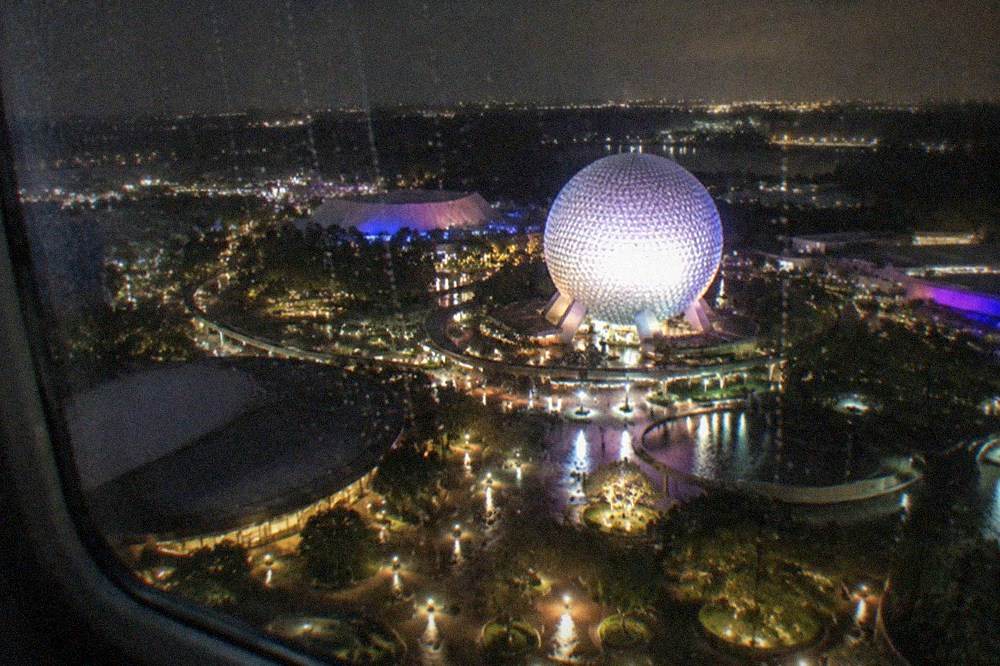
The honest pitch for night flights is not "the same views but dark." It is a different subject. Epcot, Universal Orlando, ICON Park and the Walt Disney World resort area read as constellations of light from the air, and the 180-degree views the after-hours flights advertise are designed around exactly that. Downtown Orlando on the longer routes adds a proper city grid. None of this exists in a daytime frame.
The honest caveat is gear. Through-the-glass night shooting from a vibrating helicopter is hard: you need a fast lens, high ISO, and a willingness to accept some flare and reflection. Phone cameras will capture the memory but rarely the photograph. If night photography is the actual mission, the longest route you can afford is the better buy, because more time over the lit corridor means more chances to nail a frame.
The roster's most reviewed night option is the Theme Parks After-Hours Private Helicopter Flight, a 15-minute private flight rated 4.9 from 72 reviews, priced from $131.25. It is the balanced pick: enough time over the lit parks for several passes, at a price that leaves room in the budget for a second daylight flight.
For photographers who want the maximum night canvas, the Private Helicopter After-Hours 48 Miles Tour runs 45 to 60 minutes over the theme parks and downtown, rated 5.0 from 170 reviews, the deepest review pool on the entire roster, from $236.25. And for a fireworks-timed shoot, the City Lights and Fireworks Premier tour starts at 8:30pm to line up with the Epcot show, runs 25 minutes, includes a digital photo media package, and costs from $321.42. It is a new listing with a single review so far, so treat the social proof as thin and judge it on the format, which is genuinely built for photography.
When Morning Is The Smarter Photo Slot
Morning is the smarter slot in summer, when afternoon thunderstorms in the typical 2-8pm window scrap more flights than any other cause. Slots between roughly 9:30 and 11am combine clean post-dawn air with workable light, and they are the reliable summer choice for photographers who need the flight to actually happen.
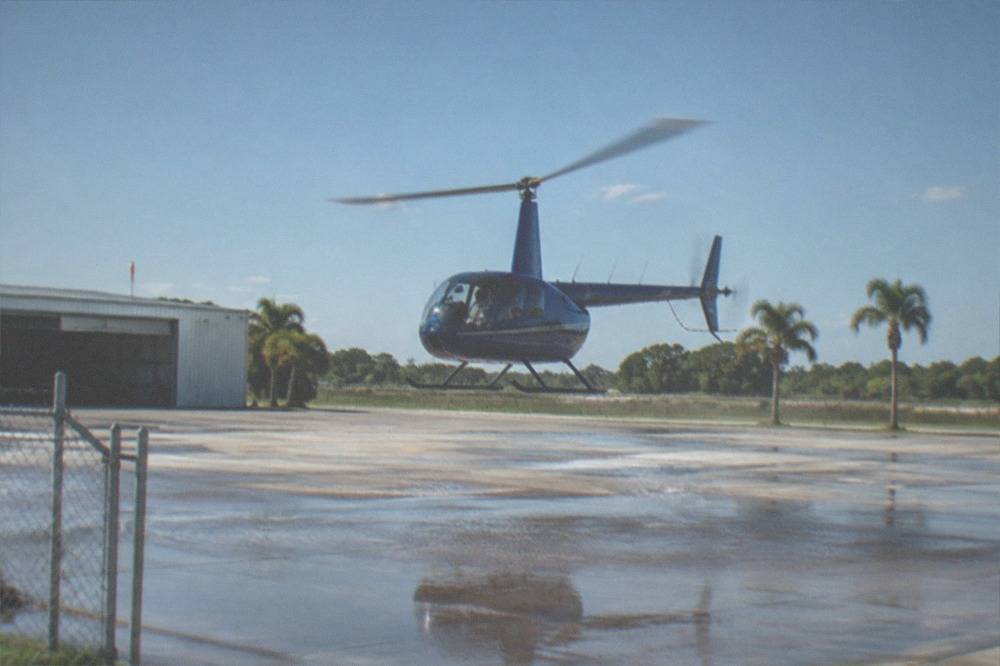
Summer in Central Florida runs on a clock. Heat builds through the morning, cumulus towers go up around midday, and the 2-8pm window carries a real chance of a scrub, a delay or a bumpy ride. That is exactly the window a sunset booking wants to occupy in June through September. So the summer play is counterintuitive but well supported: take the morning, accept cooler and flatter light, and get the flight in before the atmosphere turns against you. More of these guides are collected on Orlando Helicopter Tours.
The light is not bad, either. Early morning air is the cleanest of the day, before haze and convection, and the lakes are often glass-calm, which doubles the shoreline reflections. Wildlife is more active around the Lake Tohopekaliga area in the first hours too. If your style runs cool and graphic rather than warm and dramatic, a summer morning may genuinely suit you better than a fought-for sunset slot.
There is a second reason mornings matter: schedule protection. A morning scrub leaves the whole rest of the day to rebook into. An evening scrub on your departure-eve flight leaves nothing. Photographers traveling with non-photographer family should also note the practical appeal laid out in the site's night helicopter tour guide, which compares the after-dark options in detail if you are splitting the trip between a morning shoot and a night experience.
Which Season Gives You The Clearest Frames
November through April, the dry season, gives the most reliable clear skies and the best odds your photo flight actually flies. June through September brings the storm cycle, and hurricane season, June 1 to November 30, adds a low but real background risk with its peak from mid-August to mid-October.
Season and time of day work together, and the research is blunt about the combination. Dry season means stable air, more flyable days, and sunsets worth shooting. Wet season means your sunset slot is beautiful on the days it happens and a coin flip on the days it does not. February typically records the lowest monthly rainfall of the year, and the mid-January to mid-February and mid-September to early-October shoulders combine decent weather with thinner crowds, which also means easier bookings on the popular sunset departures.
Hurricane season deserves a calm sentence rather than a scary one. Direct major-storm hits on Central Florida are statistically infrequent, and the day-to-day schedule killer in summer is the ordinary thunderstorm, not a named storm. But if you are booking a photo flight for a September trip, build a backup day into the itinerary. Florida Today's hurricane season coverage lays out the official dates and the practical booking implications, and the site's own hurricane season guide for helicopter tours applies them to this specific product.
Practical Rules That Shape What You Can Shoot
Three practical rules shape a photo flight before you ever press the shutter: weight limits and weighing at check-in, enclosed cabins with large windows rather than open doors, and private versus shared seating that determines whether you can shoot from both sides. None of these are obstacles if you plan for them.
The weighing is the one that surprises people. Operators here weigh all passengers before boarding: MaxFlight caps a single passenger at 300 lbs with a 600 lbs combined limit for three passengers, and Orlando Helicopter Adventures publishes similar figures per aircraft type, around 290 lbs per passenger with 600 lbs combined on the R44 and 800 lbs on the R66. This is a safety requirement, not a judgment, and it matters to photographers mainly because camera bags count. Pack light, leave the second body in the car, and check the full breakdown in the site's guide to helicopter tour weight limits in Orlando.
Doors-off shooting does not exist in this market. Verified research found no bookable doors-off product among the Orlando and Kissimmee operators; the flights run enclosed helicopters with large windows, which is the norm here rather than the exception. That means every frame is through glass, so a lens hood or a dark jacket pressed against the window is your friend, and polarizers, which interact badly with acrylic, are not. The site's doors-off helicopter tours guide explains the finding in full.
The last rule is seating. On a private flight, you can often negotiate a hover or a banking pass with the pilot within the route and safety limits, and you can shoot from both sides of the aircraft. On a shared flight, you get one window and whatever side of the route it faces. For a serious photo mission, private is not luxury, it is control. The narrated day flight over the theme parks, rated 4.8 from 159 reviews and priced from $134.40, is a strong daylight private option precisely because the narration doubles as a location callout for what is coming up on each side.
The comparison between private and shared formats, including the price mechanics, is laid out in the site's guide to private versus group helicopter tours in Orlando. Read it before you pay the private premium, because for casual shooters a shared window is fine, and for a once-per-trip photo mission it very much is not.
Common Questions About Orlando Helicopter Photo Timing
What Time Of Day Is Best For Orlando Helicopter Photos?
Late afternoon into sunset, in the November to April dry season, gives the strongest light for landscape and corridor shots. Night flights are the best choice when your subject is the lit theme-park skyline. In summer, book a morning slot between roughly 9:30 and 11am to avoid the typical 2-8pm thunderstorm window.
Can a helicopter fly over Disney for photos?
No. A permanent FAA flight restriction, FDC NOTAM 4/3634, bars aircraft from a 3 nautical-mile radius over Walt Disney World property from the surface to 3,000 feet. Tours give skyline views of the theme-park corridor from outside the restricted zone, and longer routes add the unrestricted downtown Orlando skyline.
Are night helicopter flights good for photography?
They are, with the right gear and expectations. The lit parks, resort areas and downtown grid are subjects that only exist after dark, and the after-hours flights are built around 180-degree views of them. Expect to shoot through glass at high ISO with a fast lens, and treat phone shots as memories rather than photographs.
What is the best month for clear skies on a photo flight?
February typically records the lowest monthly rainfall of the year, and the dry season from November through April overall gives the most reliable clear skies. The mid-January to mid-February shoulder also carries thinner crowds, which makes popular sunset slots easier to book.
Do summer storms really cancel sunset flights?
Often enough to plan around. Afternoon thunderstorms in the typical 2-8pm window are the most common cause of weather scrubs from June through September, and operators commonly respond with rescheduling or refunds. Book a morning slot in summer, and keep a backup day in your itinerary either way.
Does the weight limit affect camera gear?
Yes, in a small way. Operators weigh all passengers before boarding, and MaxFlight caps a single passenger at 300 lbs with a 600 lbs combined limit for three passengers. Camera bags count toward the load, so pack one body and one lens rather than a full kit, and leave the rest on the ground.
If the timing decision comes down to one sentence: chase sunset in the dry season, chase the lit skyline at night, and in summer let the morning save your trip. The three flights below cover all three of those missions.