What Happens If Weather Cancels Your Helicopter Tour In Orlando
Central Florida weather grounds more helicopter flights in a single wet-season week than hurricanes do in an entire season. Here is what that actually means for your booking, and what to expect if the sky turns on your flight day.
Short answer
If weather cancels your flight, operators in the Kissimmee and Orlando area commonly offer to reschedule you to the next available slot or refund the booking. The most frequent cause is a routine summer afternoon thunderstorm, not a named storm, so booking a morning slot and leaving a buffer day in your trip are the two best protections.
What Actually Cancels Helicopter Tours In Orlando Most Often?
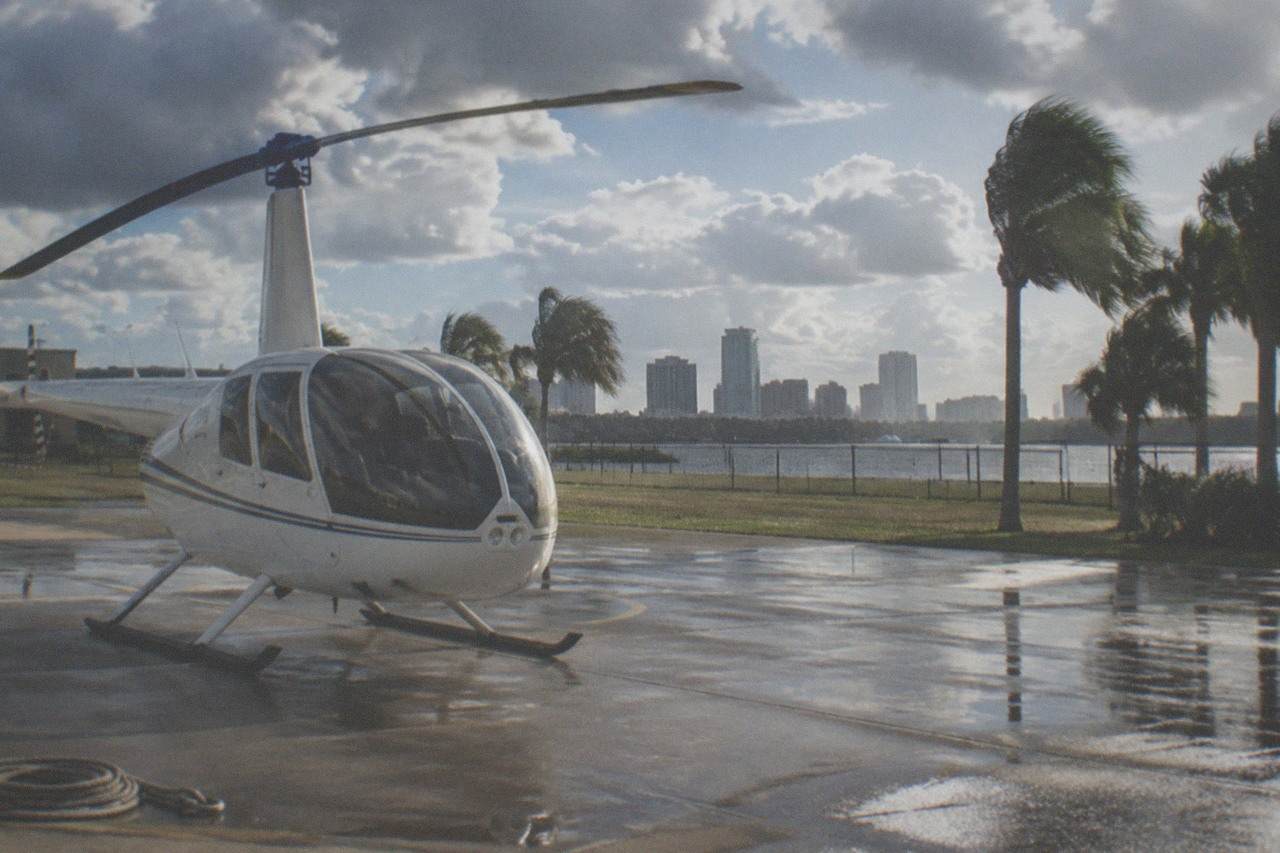
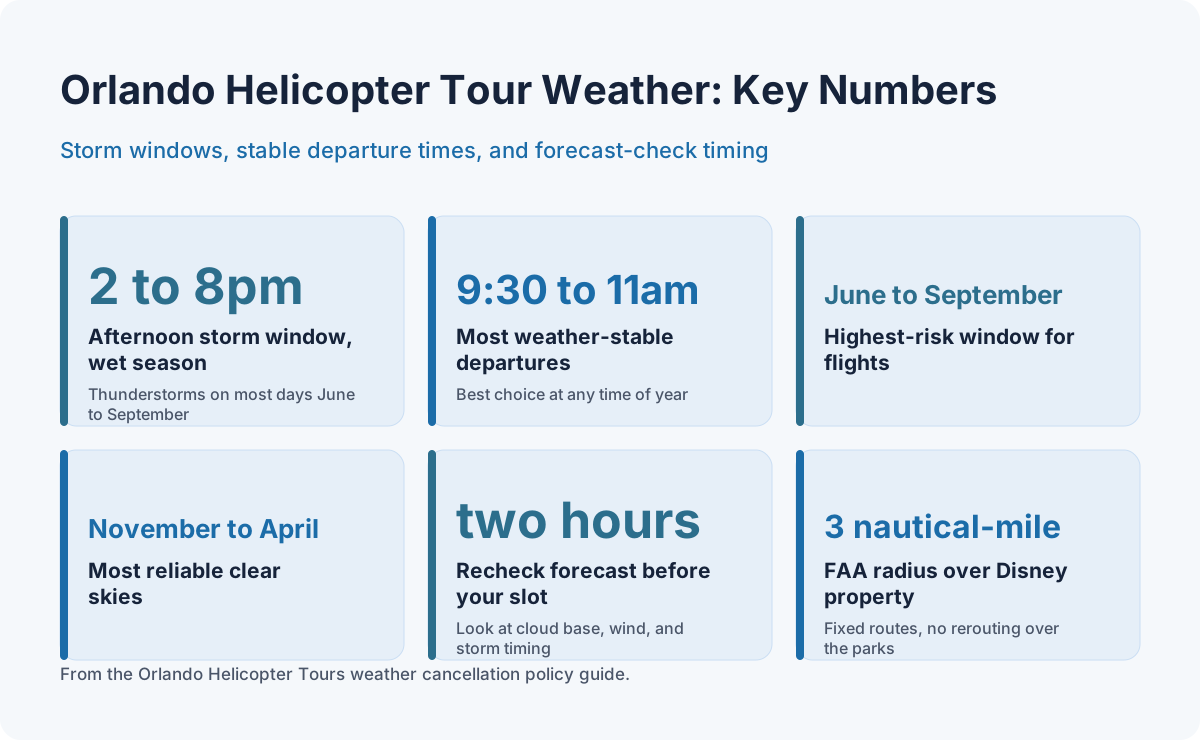
The flights that get cancelled in Orlando are almost never lost to hurricanes. Routine afternoon thunderstorms, rolling through the corridor most days between roughly 2 and 8pm from June to September, ground far more sightseeing flights than any named storm, and a low ceiling or sustained gusts will scrub a departure even when the day started clear. That distinction matters for how you plan. A hurricane is a rare, forecast-days-in-advance event that closes entire attractions and grounds the region. A summer thunderstorm is a Tuesday. It builds over the interior of the peninsula in the heat of the afternoon, sometimes sits on the theme-park corridor for 40 minutes, and then drifts east toward the coast.
Pilots are not making a judgment call about rain on your windshield. The decisions are about visibility, cloud base, wind, and lightning within a set distance of the route. A flight can legally and safely operate in light rain, and it can be scrubbed on a bright-looking day because a cell is building ten miles upwind. This is why a cancellation sometimes lands with very little warning, and why the same operator might fly the 10am departure and cancel the 4pm one on the same afternoon.
It also explains why the cancellation itself is rarely dramatic. Nobody is flying into anything. The pilot or dispatcher looks at the picture an hour ahead, decides the route does not meet the standard, and the flight simply does not launch. From the passenger side it can feel abrupt, especially when the sky overhead still looks acceptable, but the call is being made about the air you would fly through in twenty minutes, not the air over the parking lot. Operators in this corridor fly these routes daily and know exactly how the local pattern behaves, which is why their calls tend to be conservative and quick rather than agonized.
The practical takeaway is simple: book with the storm pattern in mind rather than the hurricane season headline. The official Atlantic hurricane season window runs June 1 through November 30, with peak activity from mid-August to mid-October, but direct major-storm hits on Central Florida are statistically infrequent. The ordinary thunderstorm cycle causes the day-to-day disruption, and it is entirely predictable in shape even when the specific storm is not.
When Is Weather Most Likely To Disrupt Your Flight?
June through September is the highest-risk window, because afternoon thunderstorms build on most days between roughly 2 and 8pm, while November through April offers the most reliable clear skies, and morning departures around 9:30 to 11am are the most weather-stable choice at any time of year. If you are visiting in summer and your schedule allows only one attempt at flying, put it in the morning. If you are visiting between November and April, the calendar is mostly on your side and almost any slot is a reasonable bet. Late afternoon and sunset flights carry the best photography light, which is exactly why they book out first, but they also sit closer to the storm window in the wet season.
That tension is worth naming honestly. The slot with the best light is not the slot with the best odds. A sunset flight in July is a genuinely good idea and a genuinely cancellable one. If the flight is the centerpiece of an anniversary or a birthday, either take the morning slot and accept flatter light, or book the golden-hour slot and hold a backup morning in reserve for the same trip.
There is a third option that many visitors overlook: split the difference with a late-morning departure. The light at 11am is brighter and flatter than sunset, but the air is usually still stable, the storm cells have not had the afternoon heat to build on, and the rebooking picture is friendlier because the day still has departures left after yours. For photographers this is a compromise; for everyone else it is close to the best of both worlds, and in the wet season it is the slot operators themselves tend to recommend when a customer asks which departure almost never gets scrubbed.

The table below maps the year so you can see where your travel dates sit. Treat it as a planning guide to odds, not a forecast: any individual day can break the pattern in either direction.
| Period | Typical conditions | Cancellation risk | Best booking strategy |
|---|---|---|---|
| November to April (dry season) | Most reliable clear skies, comfortable temperatures | Low | Any time of day works; sunset slots for photography |
| May and October (shoulder) | Mixed, transitional weather | Low to moderate | Morning or late afternoon both reasonable |
| June to September (wet season) | Afternoon thunderstorms, typically 2 to 8pm | Moderate, concentrated after midday | Morning slots, roughly 9:30 to 11am |
| Mid-August to mid-October (hurricane peak) | Same storm pattern plus elevated tropical-storm risk | Moderate, with rare multi-day closures | Watch forecasts, keep a buffer day |
If you want to go deeper on picking the hour rather than the month, the guide to the best time of day for a flight breaks the light-versus-reliability tradeoff down in detail.
Because weather is the one variable you cannot control, the tour you pick partly determines how easy recovery is. Shorter flights with many daily departures are the easiest to rebook into a clearer slot, and longer private routes reward booking early in your trip so a scrubbed departure still has room to be rescheduled.
What Do Operators Typically Offer When A Flight Is Cancelled?
When weather grounds a flight, operators in the Kissimmee and Orlando corridor commonly offer to reschedule you onto the next available departure or to refund the booking, and the exact terms are set by each operator's live listing, which you should read before paying rather than after a cancellation. No honest guide can promise a specific operator's exact refund formula, because those terms belong to each listing and can change. What can be said plainly is the general shape of the market: a weather cancellation caused by the operator calling the flight is a normal, anticipated event, and the standard response is a rebooking or a refund, not a forfeited payment.
The distinction that matters is who cancels. If the operator grounds the flight because of weather, wind, visibility, or lightning in the area, the general expectation is rescheduling or a refund. If you simply change your mind, or no-show for a slot you booked at 4pm on a stormy August afternoon against all advice, standard cancellation terms apply instead. That is why the pre-booking step matters more than the post-cancellation step: know the operator's weather terms and your own cancellation window before you commit.
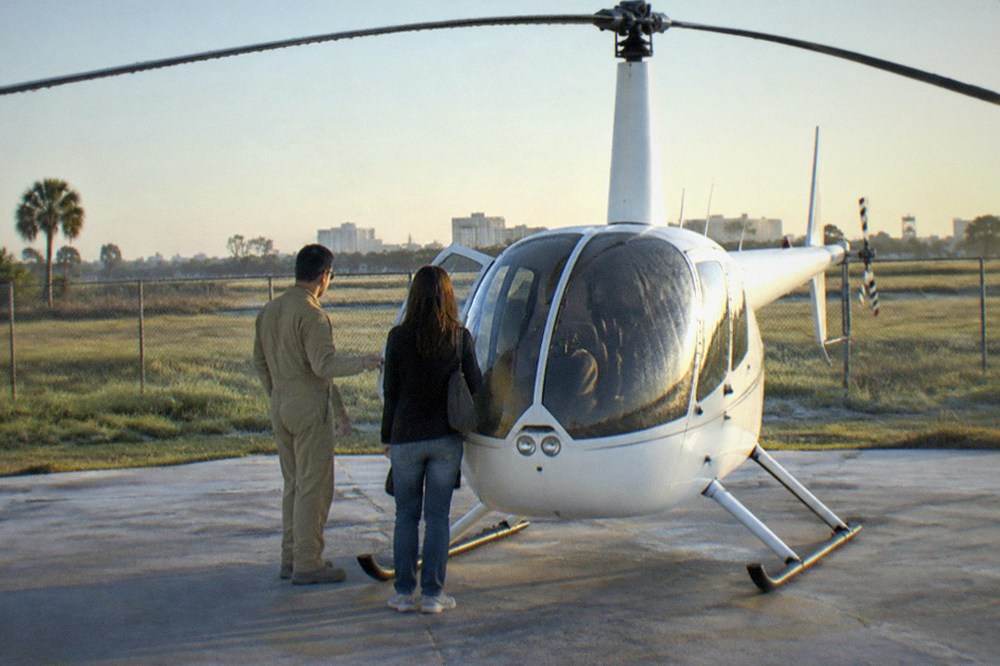
A few practical habits make the whole process smoother. Book early in your trip, not on your last day, so a reschedule has somewhere to land. Keep your phone reachable on flight day, because short-notice scrubs are usually communicated fast. And when you are offered a rebooking, take the next morning slot rather than the next afternoon one, since the storm pattern that cancelled you is likely still in place.
One more habit worth adopting: screenshot or save the listing's cancellation terms when you book. If a dispute ever arises about what was offered, you want your own record of the terms as they read on the day you paid, not a memory of what you assumed they said. It takes ten seconds and it converts a stressful conversation at the heliport into a calm one. In practice disputes are rare, because weather scrubs are so routine here that operators handle them with practiced efficiency, but the travelers who have the smoothest recoveries are almost always the ones who knew the terms before the sky turned.
| Situation | What typically happens | What you should do |
|---|---|---|
| Operator grounds the flight for weather | Reschedule to another slot or a refund, per the listing's terms | Accept the next morning departure if offered |
| You cancel inside the free-cancellation window | Full refund under the listing's own terms | Check the window length before booking |
| You no-show or cancel late | Standard late-cancellation terms apply | Avoid by booking mornings in wet season |
| Storm clears mid-afternoon | Later departures may still fly | Stay reachable in case a slot opens |
For a short, frequently-departing flight, rescheduling is usually painless because there are more slots in the day to move you into. The Day 16 Miles Private Helicopter Tour over Fun Spot, from $68.25 per person, 5.0 from 289 reviews, is the kind of product that recovers well from a weather scrub: eight minutes in the air, multiple daily departures from the Kissimmee heliport, and a low per-person price that keeps a rebooking painless.
How Should You Read The Forecast Before You Fly?
Check the hourly forecast for the departure area the evening before and again two hours before your slot, looking at cloud base, wind speed, and the storm window rather than the simple rain icon, because a 40 percent chance of afternoon storms means nothing at 10am and everything at 4pm. The Central Florida storm pattern is regular enough that the timing matters more than the probability. A forecast showing scattered storms from 3pm onward is a forecast for a fine morning flight. The same forecast with a 10am departure is a green light; with a 5pm departure it is a coin toss.
One thing worth knowing about why forecasts cannot save every booking: the routes themselves are fixed by rules, not just scenery. A permanent FAA flight restriction, a 3 nautical-mile radius from the surface to 3,000 feet over the Walt Disney World property, means pilots cannot simply reroute over the parks to dodge a cell, as the official FAA restriction record documents. Route flexibility around weather is real but bounded, which is part of why a storm sitting on the corridor grounds flights rather than merely bending them.
Practical forecast reading, in order of usefulness:
| Signal | What it means for your flight | Weight in the decision |
|---|---|---|
| Storm timing in the hourly forecast | Morning-clear, afternoon-stormy is the classic summer shape | High |
| Wind sustained above touring comfort | Gusts scrub flights even under clear skies | High |
| Cloud base height | Low ceiling limits visibility and route options | Medium to high |
| Generic daily rain percentage | Misleading without the hour-by-hour breakdown | Low |
The forecast also shapes which product to book. A long route commits more of the day to a single weather window, which raises both the reward and the exposure. The Orlando Theme Parks Private Helicopter Day Tour covers 31 or 48 miles from $207.90 per person, 5.0 from 23 reviews, and its listing carries a "Likely to Sell Out" badge, the only one on this roster, which means a weather reschedule can collide with limited availability. If you fly a sell-out-risk route in summer, book it for the earliest slot of the day. The full index of guides sits on Orlando Helicopter Tours.
Which Flights Are Most Exposed To Weather?
Night flights and long routes carry the most weather exposure per booking, because they sit late in the day or cover the most ground, while short morning flyovers are the most resilient, and fireworks-timed departures are the least flexible of all since they must launch inside a fixed show window. A fireworks flight cannot slide 45 minutes the way a morning loop can. If the sky misbehaves at 8:30pm, the show window closes and the recovery is a different night entirely. Seasonal fireworks products, from $321.42 to $346.50 per person on this roster, are the bookings where a buffer evening matters most.
The after-hours category is the interesting middle case. The Private Helicopter After-hours 48 Miles Tour, from $236.25 per person, 5.0 from 170 reviews, is the longest after-hours route on the roster and runs 45 to 60 minutes in the air, which means it needs a full hour of flyable night. Its large review pool reflects a lot of completed flights, but the exposure is structural: more time in the air, later in the day, closer to the storm window's tail.
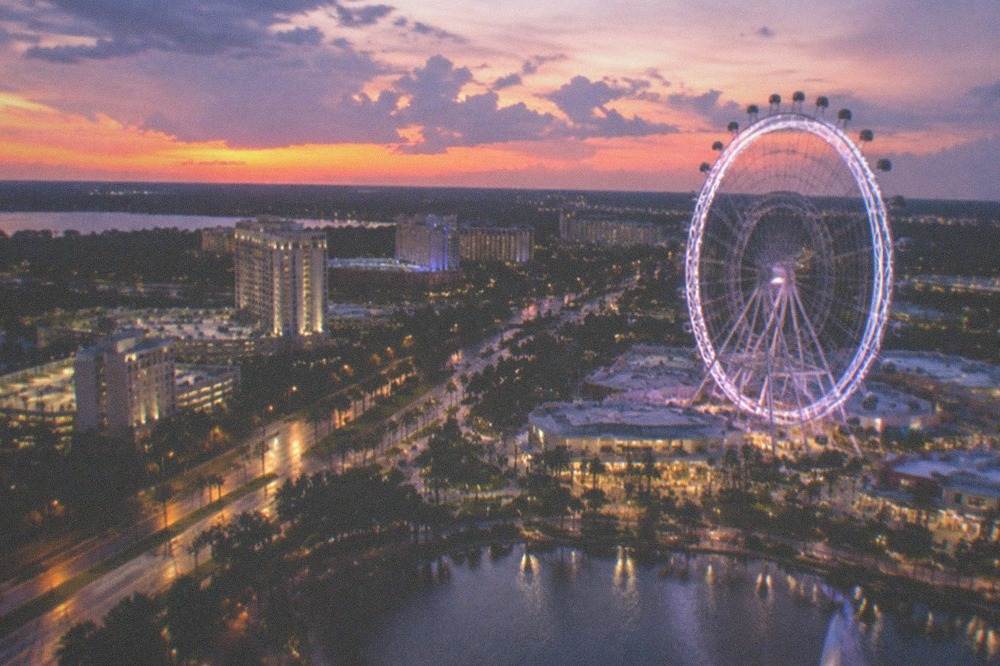
Ranking the formats by weather resilience:
| Flight type | Exposure | Why | Recovery if scrubbed |
|---|---|---|---|
| Short morning flyover, 8 to 15 min | Lowest | Early slot, brief window needed | Easy, many daily departures |
| Midday scenic route, 18 to 30 min | Low to moderate | Longer window, but avoids peak storms | Straightforward rebooking |
| Sunset or after-hours flight | Moderate | Sits near the storm window's tail | Next available evening |
| Fireworks-timed departure | Highest | Fixed show window, cannot slide | A different night, subject to season |
If your heart is set on a night flight, the guide to night helicopter flights over Orlando covers the timing tradeoffs in more detail, and the hurricane season planning guide handles the rare but real tropical-storm scenario.
Should You Book Early Or Late In Your Trip?
Book your flight in the first half of your trip, not the last day, because a weather cancellation recovered on day two of a week is a minor schedule shuffle, while the same cancellation on departure morning is a lost experience and a refund instead of a memory. This is the single highest-value habit on this page and it costs nothing. Every experienced Orlando traveler who flies helicopters does the same thing: front-load the weather-dependent activities and leave the flexible ones, shopping, resort time, pool afternoons, for the back end.
The logic compounds with the storm pattern. In wet season a scrubbed afternoon flight rescheduled to the next morning usually works on the first or second try, because mornings are the reliable half of the day. Give yourself two or three mornings of availability and the odds of never getting airborne drop to a sliver. In dry season the same buffer is nearly a formality, but it still costs nothing to hold.
It works the other direction too, and this is the part people forget. A traveler who books a fireworks flight for their final evening has no recovery at all: the show window is fixed, the season is short, and the flight home leaves the next morning. The same traveler booking that identical flight on night two simply picks another evening if weather intervenes. The product is identical, the price is identical, and the outcome is entirely a function of where in the itinerary the booking sits. When a reader asks whether a cancellation is likely to ruin their plans, the honest answer is that the itinerary placement decides it more than the forecast does.
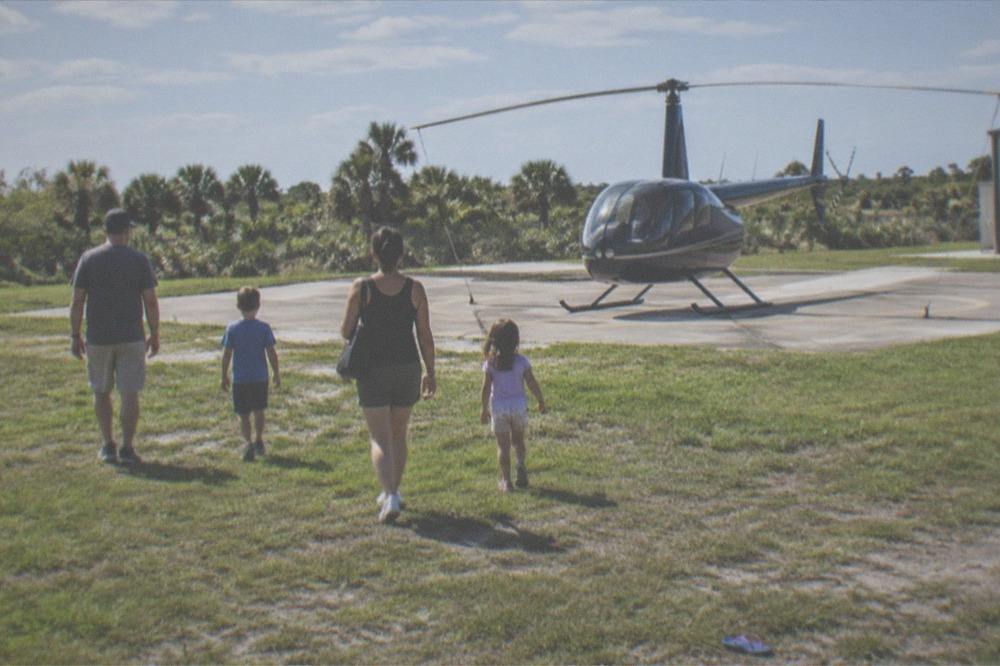
A short flyover is the ideal first-attempt product for exactly this reason. The Day 16 Miles Private Helicopter Tour over Fun Spot departs from Kissimmee, runs eight minutes, and starts at $68.25 per person with a 5.0 rating from 289 reviews, so if weather moves your slot, the rebooking is cheap, quick, and rarely painful. It is also a sensible warm-up: fly the short loop early in the week, and if you love it, upgrade to a longer route on a morning you already know is clear.
If the weather does win, the day is not wasted. The Kissimmee corridor sits next to genuinely free options: Old Town Kissimmee has free admission with classic car shows and live music, and Disney Springs offers free entry and parking with shopping and entertainment. The guide to free things to do in Orlando lists more, which is the right tab to have open while you wait for the sky to clear. And if you are still choosing between departure areas, the comparison of Kissimmee versus Orlando departures explains why most heliports sit along the US-192 corridor.
However you plan it, the honest summary is this: weather is the one variable that will occasionally beat you, the market's normal response is a reschedule or refund, and the travelers who lose nothing are the ones who booked a morning slot at the front of their trip. That is the whole playbook, and it fits in one sentence.
Common Questions About Weather Cancellations On Helicopter Tours In Orlando
What happens if weather cancels my helicopter tour in Orlando?
The operator typically offers to reschedule you onto the next available departure or to refund the booking. Exact terms live on each operator's listing, so read the weather-cancellation terms before you pay. Booking early in your trip gives a reschedule somewhere to land.
Do I get a refund if my helicopter flight is cancelled for weather?
When the operator grounds the flight for weather, rescheduling or a refund is the common response across Kissimmee and Orlando operators. No specific operator's exact refund formula can be promised here; the listing you book through is the authority on terms.
What time of day is least likely to be cancelled?
Morning slots, roughly 9:30 to 11am, are the most weather-reliable choice year-round and especially from June to September, when afternoon thunderstorms typically arrive in a 2 to 8pm window. Sunset flights have the best light but sit closer to the storm window.
Does hurricane season mean my flight will be cancelled?
Usually not. Hurricane season runs June 1 to November 30 with peak activity mid-August to mid-October, but direct major-storm hits on Central Florida are statistically infrequent. Routine summer thunderstorms cause far more cancellations and reschedules than hurricanes do.
Which tours are hardest to reschedule after weather cancels them?
Fireworks-timed departures, because they must launch inside a fixed show window, and any route whose listing shows limited availability. Short flyovers with many daily departures, like the 16-mile Fun Spot tour, are the easiest to move to a clearer slot.
How far ahead should I check the forecast before my flight?
Look at the hourly forecast the evening before and again about two hours before your slot, focusing on storm timing, wind, and cloud base rather than the daily rain percentage. In wet season, a morning-clear forecast is a green light even when the afternoon looks stormy.