Can A Helicopter Tour Fly Over Disney World In Orlando
The short answer is no, and the reason is a permanent federal flight restriction that has covered Walt Disney World since 2014. Here is exactly what the rule prohibits, why every tour route bends around it, and which real flights still deliver the theme-park skyline views people are actually looking for.
Short answer
No. A permanent FAA flight restriction, FDC NOTAM 4/3634, bars all aircraft from a 3 nautical mile radius over Walt Disney World property, from the surface to 3,000 feet. No commercial tour holds a waiver. What tours legally offer instead are skyline and corridor views from outside the restricted zone.
Can A Helicopter Tour Fly Over Disney World In Orlando?
No helicopter tour sold in the Orlando or Kissimmee area can legally fly over Walt Disney World. A permanent FAA special-security flight restriction, published as FDC NOTAM 4/3634, prohibits every aircraft, helicopters included, from entering a 3 nautical mile radius centered on the resort, from the ground up to 3,000 feet. No sightseeing operator holds the waiver needed to enter, so every tour route is planned around the restricted zone rather than through it.
That answer surprises a lot of visitors, and it is worth understanding properly, because the restriction is not a temporary weather notice or an anti-drone rule that only applies to hobbyists. It is one of the few permanent theme-park flight restrictions in the United States, rooted in federal statute and enforced as national defense airspace. It has been in force continuously since October 2014, building on an original restriction dating to 2003, and it carries no expiration date.
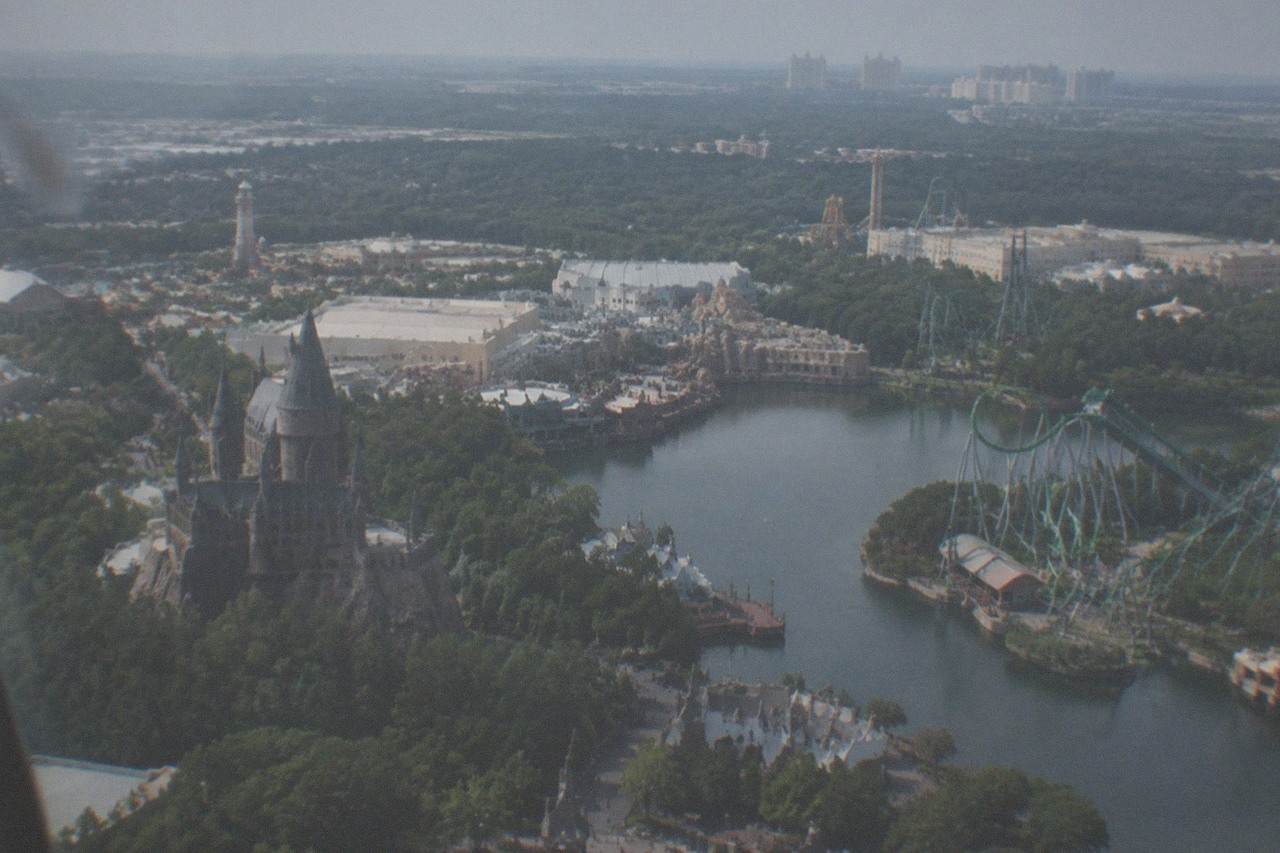
What the rule does not do is shut down helicopter tourism. The corridor around the restricted zone, running from Kissimmee up along the theme-park area, is one of the busiest sightseeing markets in Florida, and operators have built their entire route maps around giving passengers the best legal views. The result is a market of flights that skim the perimeter, climb for oblique skyline panoramas, and pair the Disney-area views with Universal, SeaWorld, the resorts, and downtown Orlando, none of which sit inside the restricted volume.
This guide explains the restriction itself, what it means in practice for route design, and which real listings give you the closest honest approximation of the "fly over Disney" experience. The distinction matters when you are comparing tours, because any operator that implies a direct overflight of the Magic Kingdom is either being loose with language or describing something that does not exist.
What Is The Disney No-Fly Zone Exactly?
The restriction is FAA FDC NOTAM 4/3634, a permanent special-security instruction covering a 3 nautical mile radius centered near 28°24'45"N / 81°34'20"W, from the surface up to and including 3,000 feet AGL, and it applies to Walt Disney World property only. It does not cover Universal Orlando, SeaWorld, or any other attraction in the area. Commercial sightseeing flights are not among the exempted categories.
The legal machinery behind it is more substantial than most visitors assume. The FAA issued it under 14 CFR 99.7 special security instructions, with a statutory basis in Section 352 of Public Law 108-7 as amended by Section 521 of Public Law 108-199, and it classifies the airspace as national defense airspace under 49 USC 40103(b). In plain terms: crossing that boundary without authorization is a federal matter, not a slap on the wrist from a theme-park security team.
The exemptions are narrow and none of them apply to tourism. Authorized air traffic control contact, Department of Defense flights, law enforcement, air ambulance work, and specifically approved Disney event waivers are the categories the NOTAM names. Sightseeing operators do not hold those waivers, so a tour helicopter that entered the zone below 3,000 feet would be in violation of a standing federal restriction. You can read the restriction's geometry on the FAA's official TFR detail page or the NOTAM text itself.
Here is the restriction at a glance:
| Element | Detail |
|---|---|
| Instrument | FDC NOTAM 4/3634 (supersedes 9/4985) |
| Status | Permanent, effective 27 October 2014, no expiration |
| Radius | 3 nautical miles |
| Center | Approx. 28°24'45"N / 81°34'20"W (WDW property) |
| Altitude band | Surface to 3,000 feet AGL |
| Geographic scope | Walt Disney World property only, not Universal or SeaWorld |
| Exempt flights | ATC-authorized, DoD, law enforcement, air ambulance, approved event waivers |
One nuance worth knowing: the ceiling matters as much as the radius. The restriction runs from the surface up to 3,000 feet above ground level, which is well above the cruising altitude of any local sightseeing flight. A helicopter cannot simply pop over the top and look down. Combined with the 3 mile radius, the zone is effectively a closed cylinder over the resort, and every tour route you can book is drawn to stay outside it.
Which Tours Get The Closest Legal Theme Park Views?
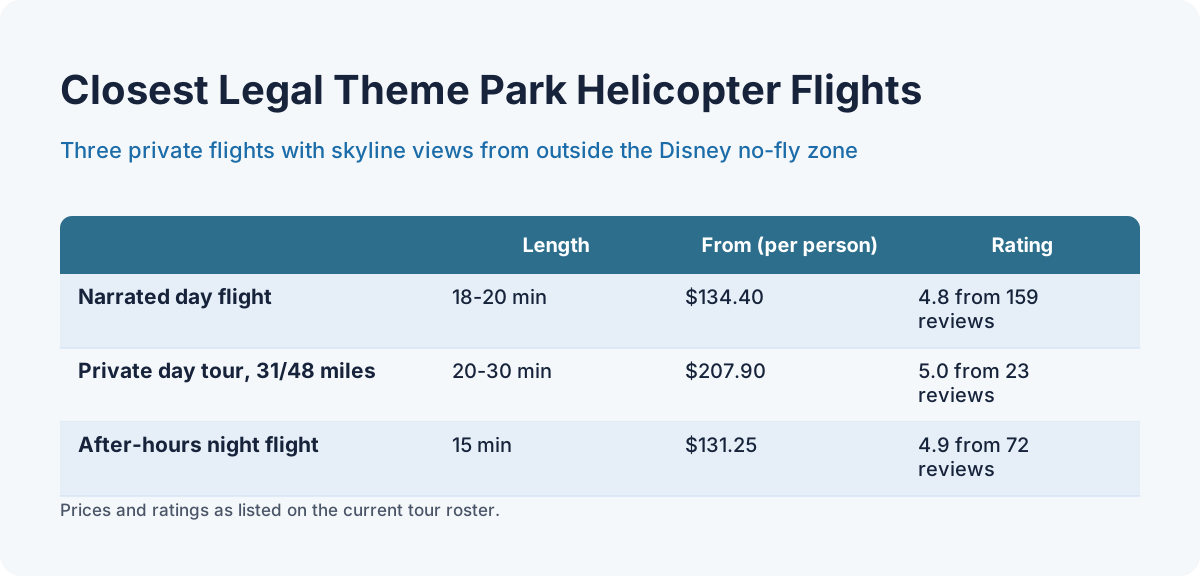
Three flights on the current roster are built specifically around the theme-park corridor from outside the restricted zone: a narrated day flight from $134.40, a longer private day tour covering 31 or 48 miles from $207.90, and an after-hours night flight from $131.25. All three are private flights, all three advertise theme-park skyline views rather than overflights, and none of them enters Disney airspace.
The narrated day flight is the strongest pick for this specific goal. It runs 18 to 20 minutes, holds a 4.8 rating from 159 reviews, and its narrated route takes in Gatorland, SeaWorld, Universal Orlando, Disney Springs, Epcot, and Hollywood Studios as skyline views. The narration matters here: because you are looking at resort towers and park perimeters from a distance, a pilot who tells you what you are looking at turns a corridor flight into something closer to a guided tour.
The longer private day tour is the option if you want more miles under the rotor. It comes in a 31-mile version running about 20 minutes and a 48-mile version running 28 to 30 minutes, rated 5.0 from 23 reviews, and it adds the downtown Orlando skyline to the theme-park corridor. It is also the only listing on the roster carrying a "Likely to Sell Out" badge, so if it is your first choice, booking ahead is genuinely advisable rather than marketing pressure.
The night flight rounds out the trio. At 15 minutes from $131.25, rated 4.9 from 72 reviews, it flies the after-hours corridor with 180-degree views of the lit parks, Epcot, Universal, ICON Park, and the Disney-area lights. For many visitors the illuminated skyline at night reads as more spectacular than a daytime pass, and the restriction changes nothing about that experience.
| Flight | Length | From (per person) | Rating | What you actually see |
|---|---|---|---|---|
| Narrated day flight | 18-20 min | $134.40 | 4.8 from 159 reviews | Skyline views toward Epcot, Hollywood Studios, Universal, SeaWorld, Disney Springs |
| Private day tour, 31/48 miles | 20-30 min | $207.90 | 5.0 from 23 reviews | Theme-park corridor plus downtown Orlando skyline |
| After-hours night flight | 15 min | $131.25 | 4.9 from 72 reviews | Lit parks, Epcot, Universal, ICON Park, Disney-area lights |
Prices and ratings here come from each operator's live listing, and that listing is always the authority at the moment you book. Treat the figures above as the current planning baseline rather than a quote.
What Does The View Actually Look Like From Outside The Zone?
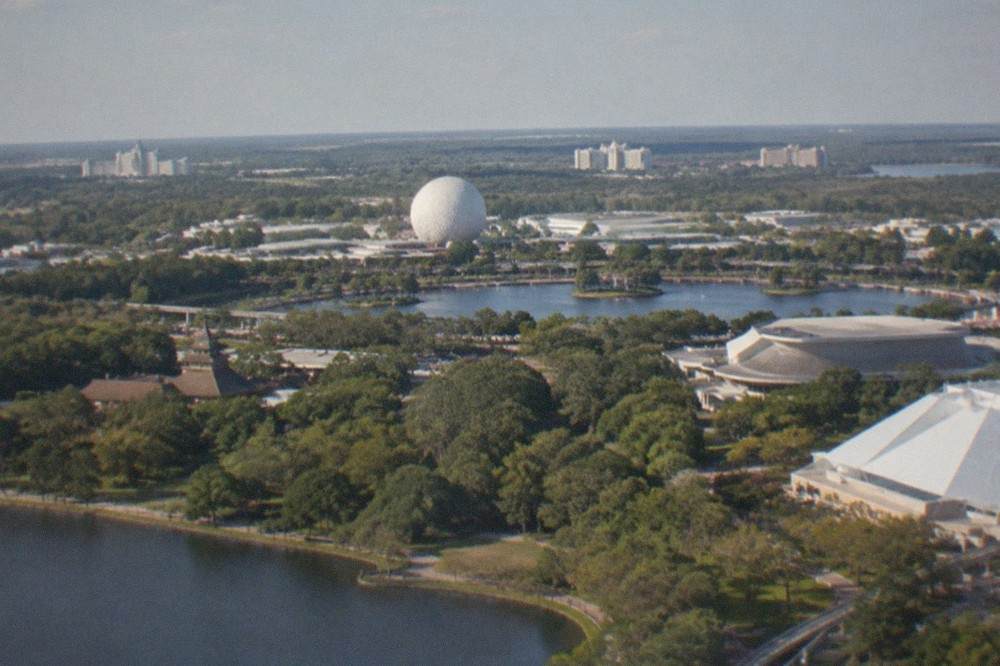
From a legal vantage point you see the Disney-area skyline the way you see a city skyline from across a bay: resort towers, the Epcot ball, Expedition Everest's silhouette, hotel clusters, and the tree canopy of the property, all recognizable but viewed from a distance rather than directly overhead. Longer routes add Universal, SeaWorld, the Kissimmee lakes, and downtown Orlando to fill the frame.
That is not a consolation prize, and it helps to set expectations honestly before you book. A 3 nautical mile radius is roughly 3.5 statute miles, so a tour hugging the boundary is looking at the resort from several miles out. At tour cruising altitudes the property still fills a large part of the horizon, and at sunset or after dark the lit parks read dramatically, but you will not see individual ride vehicles or straight-down views of Cinderella Castle. Any listing or review that suggests otherwise is describing the generic magic of aerial sightseeing, not the geometry of this airspace.
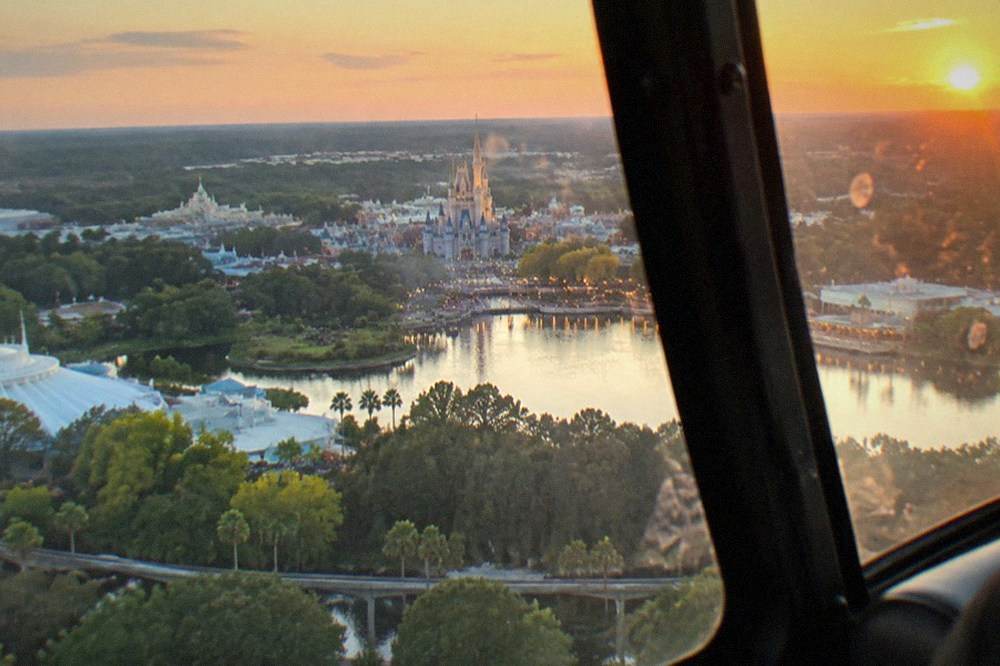
What you gain in exchange is a route that strings together far more than one resort. The corridor between Kissimmee and the restricted boundary passes Gatorland, the SeaWorld area, the Universal skyline, the Disney Springs cluster, and the resort-lined lakes, and the longer day and night routes extend to downtown Orlando. In practice the best photos from these flights tend to be wide skyline panoramas with the helicopter window frame in the foreground, which is exactly what the route design is optimized to deliver.
For more on how light and timing change what you get out of the same airspace, the best time of day for aerial photos is worth a read before you pick a slot. Sunset and late afternoon are consistently rated the best light for this kind of wide skyline shot.
Why Are All The Departure Points In Kissimmee?
Most Orlando-area helicopter tours depart from Kissimmee, along the US-192 Irlo Bronson Memorial Highway corridor or near Kissimmee Gateway Airport, because that geography sits immediately adjacent to the theme-park area and lets routes reach the corridor boundary quickly. Downtown Orlando and International Drive sit farther north, so flights from there spend more time in transit and less time over the scenic corridor.
The departure map is a direct consequence of the restriction. An operator based in Kissimmee can be at the edge of the scenic corridor within a couple of minutes of lift-off, which is why the short 16-mile loops and the longer theme-park routes cluster there. MaxFlight operates from the Kissimmee Gateway Airport area, Orlando Helicopter Adventures sits on West Irlo Bronson Memorial Highway, and Apex Air Tours flies from Kissimmee as well. Only the International Drive listings depart from Orlando proper, and their routes reflect the extra transit time. More of these guides are collected on Orlando Helicopter Tours.
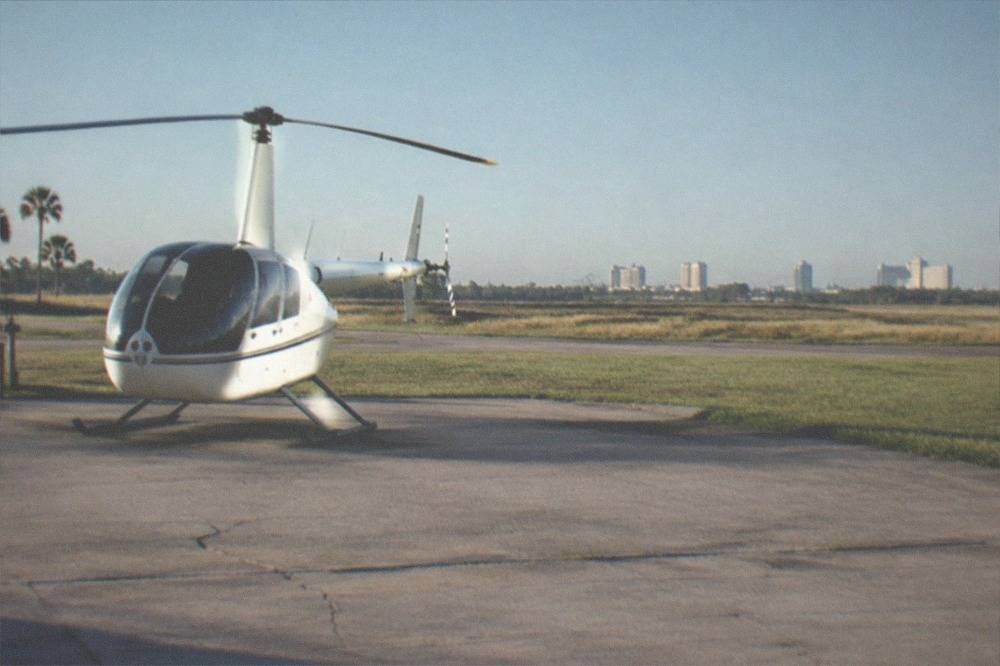
This matters for planning in two ways. First, check the real departure city on the listing before you book, because a tour marketed under the Orlando name may actually leave from a Kissimmee heliport, and that affects your drive time from your hotel. Second, if you are staying in the Disney-area resorts or the vacation-rental belt along US-192, the Kissimmee departures are the convenient ones, often a short drive rather than a cross-town trek. The Kissimmee versus Orlando departure comparison breaks the trade-offs down in detail.
The regulatory side is quieter but equally real. Most of these short sightseeing flights operate under 14 CFR Part 91 via a section 91.147 Letter of Authorization rather than full Part 135 charter certification, a framework explained clearly by this Part 91.147 explainer. It still requires drug and alcohol testing programs and passenger safety briefings, but it is a lighter oversight regime than on-demand charter work, which is one reason the short-tour market can price flights the way it does.
Is A Night Flight The Better Way To See The Parks?
For many visitors, yes. After dark the theme-park corridor becomes a field of lights, and the distance imposed by the flight restriction matters much less when what you are looking at is illumination rather than detail. Night flights in this market start from around $131 per person, and the deepest-reviewed option is a 45 to 60 minute private after-hours tour rated 5.0 from 170 reviews.
The psychology is simple. In daylight, distance costs you detail: from the boundary you can see the skyline but not the texture of the parks. At night, the parks are already experienced as light rather than detail from anywhere, so the aerial version loses almost nothing. The after-hours flights sell the lit Epcot, the Universal glow, ICON Park's wheel, and the Disney-area lights, and the 180-degree seating arrangements on some listings make the most of that panorama.
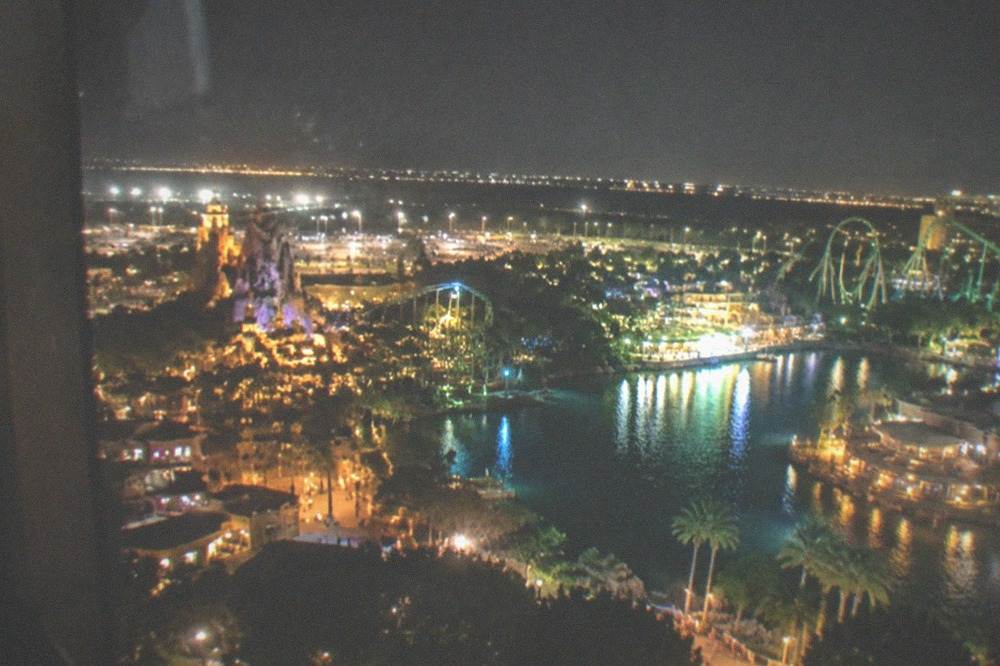
The flagship option is the 48-mile after-hours private tour, from $236.25, running 45 to 60 minutes with the theme parks and downtown Orlando in the route. With 170 reviews it has the deepest review pool on the entire roster, plus a Badge of Excellence, which makes it one of the few listings here where the social proof is as strong as the product description. If your mental image of a Disney-area flight is a night skyline, this is the one that matches it.
For a full comparison of the after-dark options, including the shorter and cheaper night routes, see the night flight guide. The short version: the 15-minute after-hours flight is the value pick, and the 48-mile tour is the immersion pick.
How Do You Book Honestly And Avoid Misleading Listings?
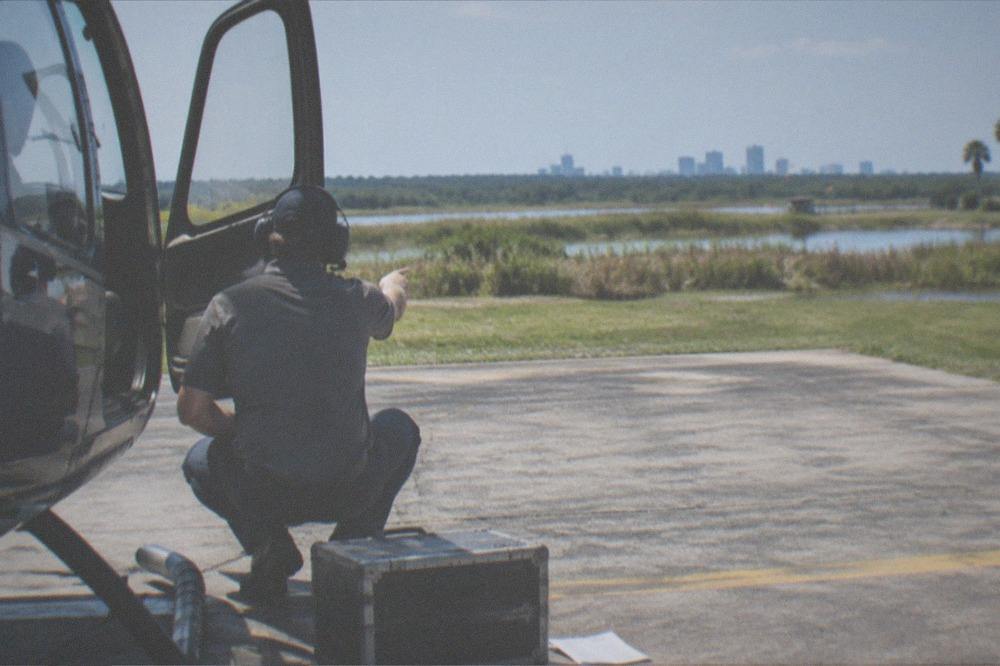
Read the route description rather than the headline. An honest listing says skyline views, views toward, or corridor views and names its real stops; a misleading one implies an overflight of the parks. Check the departure city, confirm the flight length versus total duration, and treat the live listing as the only authority on price, weight rules, and cancellation terms.
The market is overwhelmingly honest, partly because the restriction makes dishonesty easy to check: a route that truly flew over the Magic Kingdom would be illegal, and no operator is advertising that in route text. But headlines and review snippets can drift into loose language, so the route description is the document to trust. The narrated day flight, for example, names Gatorland, SeaWorld, Universal, Disney Springs, Epcot, and Hollywood Studios as its stops, which is a corridor itinerary, and its own copy frames it that way.
A few practical checks before you pay:
| Check | What to look for | Why it matters |
|---|---|---|
| Route wording | "Skyline views" or "views toward", never "over the Magic Kingdom" | Overflight claims cannot be legally delivered |
| Departure city | Kissimmee versus Orlando on the listing | Changes your drive time by 20-30 minutes |
| Flight time vs total time | An 8-10 min flight may be a 30-45 min experience with check-in | Sets expectations for the price |
| Weight rules | Individual and combined limits, weighing before boarding | Avoids a denied boarding at the heliport |
| Weather terms | Rescheduling or refund language for weather cancellations | Summer storms routinely scrub afternoon slots |
Weight rules deserve a special mention because they are strictly enforced at the heliport. MaxFlight caps a single passenger at 300 lbs with a 600 lb combined limit for three passengers; Orlando Helicopter Adventures lists approximately 290 lbs per passenger with 600 lbs combined on the R44 and 800 lbs on the larger R66. Everyone is weighed before boarding, infants under roughly 28-30 lbs fly free on a lap up to age 2, and parties of four or more split across flights. The weight limits guide covers the details.
Weather is the other honest-check. Central Florida's wet season, June through September, brings afternoon thunderstorms typically between 2 and 8 pm, and operators commonly offer rescheduling or refunds for weather scrubs. Morning slots around 9:30 to 11 am are the reliable summer choice, and the dry season from November to April gives the most dependable clear skies. The weather and cancellation guide explains what to expect.
What About Fireworks And Seasonal Flights?
Fireworks-timed flights are the premium version of this experience, and they obey the same restriction: you watch the shows from outside the zone, synced to the soundtrack through headsets, rather than from directly above. Seasonal options run from around $321 to $347 per person for 25 to 45 minute private flights, timed to the Epcot and park show windows.
The fireworks category is where the distance question gets most interesting. A 77-mile private fireworks tour, from $346.50 for 45 minutes, covers all the theme-park show sites from legal vantage points, and the City Lights premier tour from $321.42 times its 8:30 pm start to the Epcot show with a photo package included. A limited-time Halloween and Christmas fireworks tour, from $346.50, adds premium sound headsets synced to the show soundtrack, which is a genuine workaround for the distance: you cannot be over the show, but you can hear it as if you were.
These are the most expensive flights in the market and the most schedule-dependent, since they only make sense when the parks are running evening shows. The seasonal listings exist specifically around the Halloween and Christmas windows. If your trip falls inside those windows and a night skyline is the goal, a fireworks flight is the closest thing to the overflight experience that the law permits, and it is priced accordingly.
The Bottom Line For Disney-Area Flights
No tour flies over Walt Disney World, and no honest operator claims otherwise. What the market sells instead is a corridor experience: skyline views toward the resort from outside a 3 mile restricted zone, bundled with Universal, SeaWorld, the lakes, and downtown Orlando. The narrated day flight, the 31 or 48 mile private tour, and the after-hours night flight are the three listings built squarely around that corridor.
The restriction is stable, permanent, and unlikely to change, so this is not a case of waiting for the rule to lapse. The good news is that the workaround is genuinely good. The same geography that blocks overflight also concentrates a dozen world-class sightseeing targets inside a compact corridor, and a well-designed route strings them together in 15 to 60 minutes. Whether that reads as a disappointment or as a bonus depends on what you expected, and the point of this guide is that you now know exactly what to expect.
If you are weighing this against other ways to see the area from above, or wondering whether the flights are worth the money at all, the value question gets a straight answer elsewhere on this site. For the corridor itself, the three flights below are the ones to compare first.
Common Questions About Flying Over Disney World
Can a helicopter tour fly over Disney World in Orlando?
No. A permanent FAA restriction, FDC NOTAM 4/3634, bars all aircraft from a 3 nautical mile radius over Walt Disney World property, from the surface to 3,000 feet. No sightseeing operator holds a waiver, so every bookable tour stays outside the zone and offers skyline views instead.
Why can't helicopters fly over Disney World?
The FAA designated the resort's airspace as national defense airspace under a permanent special-security instruction issued under 14 CFR 99.7, with a statutory basis in federal law. It has applied continuously since October 2014 and covers Walt Disney World property only, exempting just ATC-authorized, military, law enforcement, and air ambulance flights.
Can helicopters fly over Universal Orlando?
Yes. The restriction covers Walt Disney World property only and does not extend to Universal Orlando, SeaWorld, or other attractions. Tours routinely include the Universal skyline in their routes, and the narrated day flight lists it among its stops.
What do you actually see on a Disney-area helicopter tour?
You see the theme-park corridor from outside the restricted zone: resort towers, the Epcot ball, hotel clusters, the lit parks at night, plus Universal, SeaWorld, the Kissimmee lakes, and on longer routes the downtown Orlando skyline. It reads as a wide panorama rather than a straight-down view.
Do any tours legally enter the Disney no-fly zone?
No commercial sightseeing tour does. The only authorized entries are ATC-contacted operations, Department of Defense, law enforcement, air ambulance flights, and specifically approved event waivers, none of which apply to tourism flights sold to the public.
Are fireworks helicopter tours also restricted?
Yes, the same restriction applies. Fireworks flights watch the shows from outside the zone, timed to the park show schedules, with some listings syncing headsets to the show soundtrack. They run roughly $321 to $347 per person for private flights of 25 to 45 minutes.