Do They Weigh You Before An Orlando Helicopter Ride?
Yes, every passenger gets weighed before boarding an Orlando or Kissimmee helicopter tour. Here is exactly how the weigh-in works, what the limits are, and how to make it painless.
Do They Weigh You Before An Orlando Helicopter Ride?
Yes. Every passenger on an Orlando or Kissimmee helicopter tour is weighed before boarding, on every flight, with no exceptions for age or status. MaxFlight and Orlando Helicopter Adventures, the two main operators along the theme-park corridor, both publish this requirement directly on their listings. The weigh-in takes a few seconds, the number is not announced aloud, and it exists for one reason: a small helicopter's balance depends on it.
That is the short answer, but the nervous version of the question usually has a second half attached. Most people asking this are not really asking about procedure. They are asking whether someone is going to call out a number in front of their family, whether a scale is going to say something that ends the flight, or whether they should book at all. Those fears deserve straight answers, and this article gives them.
The honest starting point is that the scale is not a judgment and it is not a shakedown. It is a weight-and-balance calculation, the same one that governs every helicopter flight everywhere. A Robinson R44, the four-seat workhorse of the Kissimmee tour fleet, behaves differently depending on where mass sits inside the cabin. The pilot needs real numbers to compute that before the engine ever starts. Guesses do not fly.
If you are already sold and just want the practicalities, the three flights below are the short, low-commitment options where the weigh-in is the only real hurdle between you and the seat.
The first of those, the Day 16 Miles private flight over Fun Spot, is the cheapest single-length private product on this roster at from $68.25 per person for an 8-minute ride, carrying a 5.0 rating from 289 reviews. If the weigh-in was your only hesitation, the rest of the experience is famously easy: one quick check-in, one scale, one briefing, and you are airborne over the Fun Spot skyline.
Why Operators Weigh Every Passenger
A helicopter's center of gravity shifts with every body on board, and a small tour aircraft has little margin for error. The pilot must know each passenger's weight to calculate whether the load is within limits and where each person should sit. Federal rules for local sightseeing flights, which run under 14 CFR Part 91 via a section 91.147 Letter of Authorization, still require passenger briefings and load planning. The scale makes that math honest.
An airplane distributes lift across a long wing and tolerates a fair amount of loading slop. A helicopter does not. Its rotor disc generates lift from a single point, and the machine pivots around that point. Put three people of the wrong combined mass in the wrong seats and the aircraft can leave its safe envelope before anyone notices a problem. This is why the industry phrase is "weight and balance," not just "weight." The scale answers the weight half; the pilot's seating chart answers the balance half.
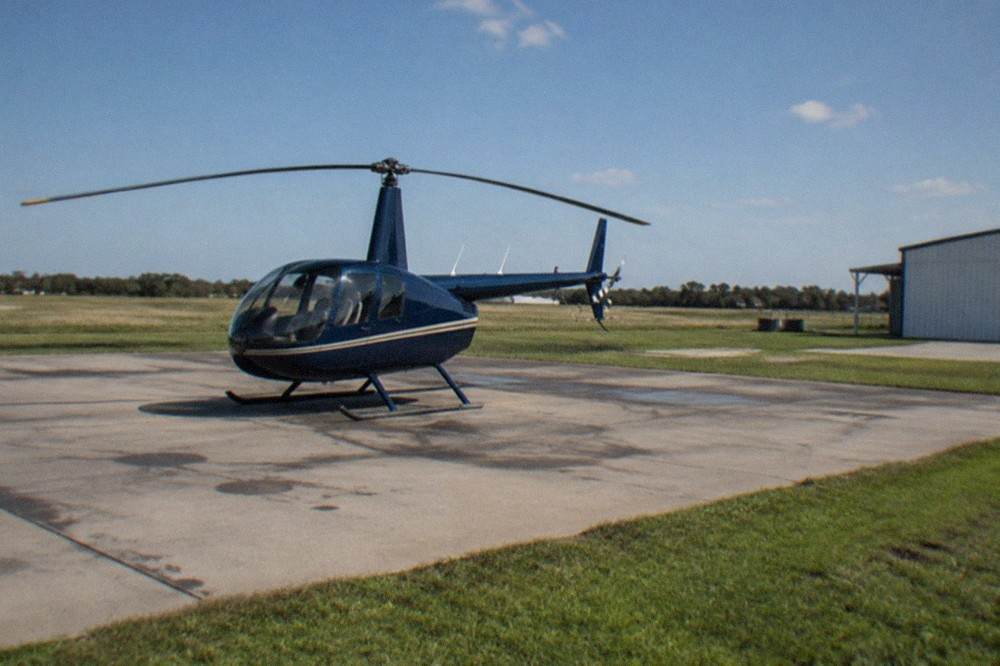
The regulatory frame matters here too. Most short Kissimmee sightseeing flights are not full Part 135 charter operations; they fly under a section 91.147 Letter of Authorization, a lighter framework that still mandates drug and alcohol testing programs and passenger safety briefings. Weighing passengers is part of the operator's own safety practice rather than a single federal line-item, which is why the exact limits vary slightly between companies even though the requirement itself is universal.
Nobody is weighed to be scored. The crew member running the scale writes a number on a load sheet, and that sheet goes to the pilot. If you want the full breakdown of limits by aircraft type, the site's dedicated guide to helicopter tour weight limits in Orlando carries every published figure side by side.
| Operator / aircraft | Per-passenger max | Combined max | Notes |
|---|---|---|---|
| MaxFlight (Kissimmee Gateway area) | 300 lbs (136 kg) | 600 lbs for 3 passengers | Everyone weighed before boarding; parties of 4+ split across flights |
| Orlando Helicopter Adventures, R44 | approx. 290 lbs | 600 lbs (up to 3 passengers) | Same weighing requirement and lap-child policy |
| Orlando Helicopter Adventures, R66 | approx. 290 lbs | 800 lbs (up to 4 passengers) | Larger aircraft, one extra seat of headroom |
Is a short private flight starting to sound more doable than you feared?
What The Scale Moment Actually Looks Like
In practice the weigh-in is a bathroom-style digital scale near the check-in desk, done one passenger at a time, with the number shown only to the crew member recording it. Nobody announces your weight, nobody posts it, and the whole step takes less time than signing the waiver. You step on, step off, and move to the safety briefing. Most passengers barely register it as an event.
Here is the sequence at a typical Kissimmee departure. You arrive, you check in under your booking name, and the desk asks each person in the party to step on the scale. Shoes stay on. Bags get set aside, because carry-on items count toward the load too and the operator will weigh or ask about them. The crew member records the figure, marks your seat assignment, and hands you toward the briefing area. That is the entire ceremony.
The privacy part is real and worth underlining for anyone dreading it. The scale faces the desk, not the room. The number is written on a clipboard or typed into a tablet, and the pilot reads the totals, not a callout. Families with teenagers, couples where one person is sensitive about it, and solo travelers all go through the identical few seconds. Crews do this dozens of times a day; to them the scale is as routine as a parking gate.
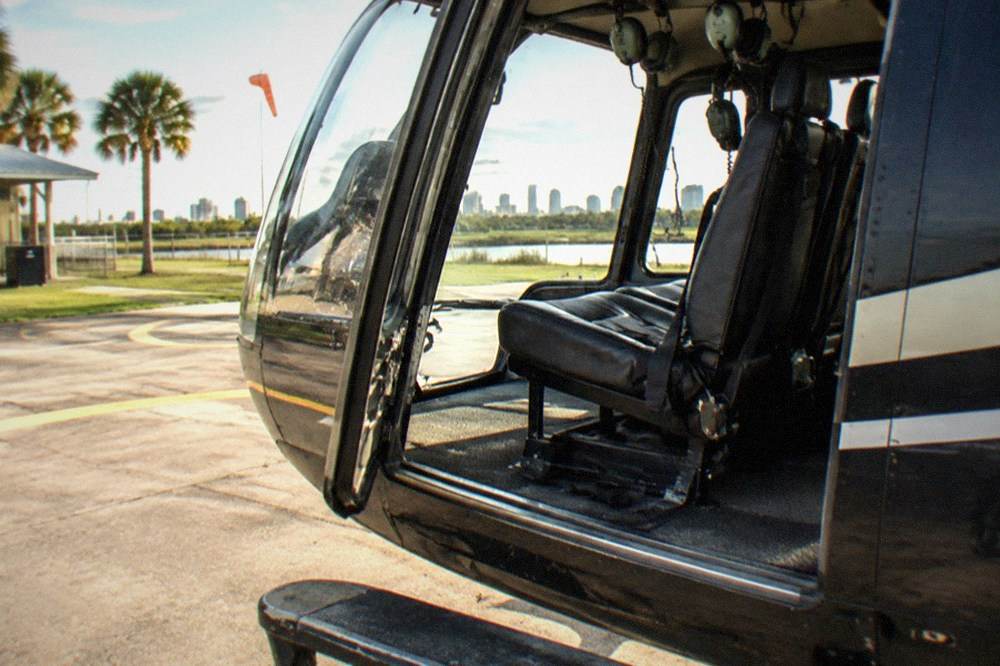
One practical tip from the operator side: book under honest expectations rather than hoping to dodge the scale. There is no path to the helicopter that skips it, and there is no discount for declining. The operators that publish their policies, including Orlando Helicopter Adventures' own FAQ page, state plainly that all passengers must be willing to be weighed for safety. Treat it like airport security: a brief, procedural moment that protects everyone in the cabin, including you.
What Happens If You Are Near The Limit
Being close to a limit rarely ends a booking. The usual outcomes are a seat reassignment, a party split across two flights, or a move to a larger aircraft where one is available. MaxFlight's published practice is that excess weight leads to denial or a split booking, not a surcharge, and no operator on this roster publishes a per-seat overweight fee. The number that matters most is the combined total, not any single passenger's.
Start with the single-passenger ceiling, because it is the hard one. If one person exceeds the per-seat maximum for the aircraft, roughly 290 to 300 lbs depending on the operator, that person cannot fly on that machine, and no seating chart fixes it. The R66 gives a little more combined headroom at 800 lbs for four, but the per-seat figure stays around 290. That is physics, not policy, and no crew can waive it.
The combined figure is where flexibility lives. A party of three that totals just over the R44's 600 lb line is still comfortably inside the R66's 800 lb capacity for four, so an operator with both aircraft can simply move the group. A party of four is split across two flights by default at MaxFlight anyway, which turns the combined limit into two smaller, easier sums. Splitting is common enough that operators schedule for it.
| Scenario | What typically happens | Why |
|---|---|---|
| One passenger over the per-seat max | That passenger cannot fly on that aircraft | The seat and attachment points are rated for the limit |
| Three passengers over 600 lbs combined | Move to an R66 if available, or split the party | Balance math, not a judgment call |
| Party of four or more | Split across two flights as standard practice | Cabin only seats three to four |
| Total weight fine, distribution awkward | Crew reassigns seats | Center-of-gravity placement |
None of this is unique to Orlando. Weight-and-balance refusals happen at every helicopter tour operation in the country, and the ones that handle it well, which is the norm here, treat it as a scheduling problem. If you are worried about your own numbers, the honest move is to check the operator's published limits before booking rather than gambling at the desk.
Kids, Lap Infants, And Splitting A Party
Families get the gentlest version of the weigh-in. Infants under roughly 28 to 30 lbs fly free on a lap up to age 2, toddlers and children are weighed like anyone else, and parties of four or more are split across flights as a matter of course rather than a punishment. Nobody at the desk treats a family of five as a problem; the crew simply runs two loads.
The lap-infant rule is the one that surprises people in a good way. A child under about 28-30 lbs, up to age 2, does not need a paid seat and does not count against the combined limit the way a seated passenger does. That is why operators ask the child's weight at check-in too: the figure still matters to the load sheet, it just does not cost a ticket. Once a child needs their own seat, they are weighed and seated like any other passenger, usually up front or in the middle depending on balance.
Splitting a party sounds worse than it is in practice. At MaxFlight, parties of four or more split across flights as the standard arrangement, and the flights usually run back to back, so the gap on the ground is measured in minutes. Some families actually prefer it: one parent flies with the older kids while the other stays with the baby, then they swap. If that arrangement appeals, the site's guide to taking a helicopter tour with kids in Orlando walks through the whole family logistics picture.
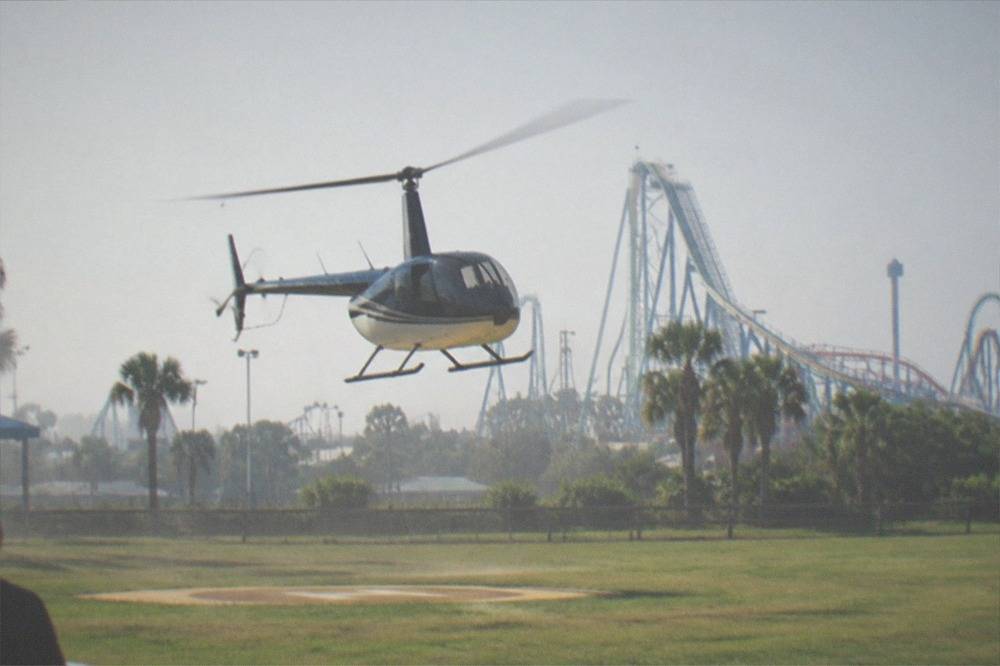
For a group that wants to stay together in one cabin, the aircraft choice does the work. The Walt Disney World Resort Area tour from Orlando Helicopter Adventures flies a menu of route options, and its price varies by flight length, so the live listing is the place to confirm both the rate and the seat count for your party size.
How To Make The Weigh-In A Non-Event
Treat the scale like the waiver line: a procedural step you complete in seconds, not a test. Wear normal clothes, leave heavy bags in the car, know your party's rough combined total before you book, and pick a morning slot in summer so weather does not add stress to the day. Travelers who arrive knowing the limits almost never have a surprise at the desk.
A little arithmetic at booking time removes nearly all the friction. Add up your party's weights honestly, compare the total against the 600 lb three-passenger or 800 lb four-passenger lines, and pick the product that fits. If the total is close, call the operator's number on the listing and ask which aircraft your flight uses. Operators answer this question daily and would much rather sort it on the phone than at the helipad.
Timing helps more than people expect. Wet-season afternoons in Central Florida, June through September, bring thunderstorms in the typical 2-8pm window, and a weather hold stacks everyone into the tiny check-in area, which makes every procedural step feel bigger. A morning slot, roughly 9:30 to 11am, moves faster and keeps the mood light. The site's guide to the best time of day for an Orlando helicopter tour covers the full timing picture, and the helicopter tour safety guide explains the briefing you will sit through right after the scale.
Finally, remember who the scale is for. The crew is not protecting the operator from liability; they are protecting the rotor system's margins, which is the same thing as protecting you. This site, Orlando Helicopter Tours, tracks the operators' published practices precisely because the boring steps, weighing, briefing, seat assignment, are the ones that keep the fun part uneventful. A passenger who steps on the scale, gets a seat, and hears the rotor spool up has just watched a safety system work exactly as designed.
If the weigh-in was the last thing standing between you and a booking, these are the three short flights to compare first.
Common Questions About Being Weighed On An Orlando Helicopter Ride
Do They Weigh You Before An Orlando Helicopter Ride?
Yes. Every passenger is weighed before boarding on Orlando and Kissimmee helicopter tours, at both MaxFlight and Orlando Helicopter Adventures. The step takes a few seconds, the number is recorded privately, and it is required on every flight with no exceptions.
Do they call out your weight in front of other passengers?
No. The scale faces the check-in desk, the crew member records the figure on a load sheet, and the pilot reads the totals. Nobody announces individual weights aloud, and most passengers barely notice the step happening for the person ahead of them.
What is the weight limit for an Orlando helicopter tour?
At MaxFlight, a single passenger cannot exceed 300 lbs (136 kg) and three passengers cannot exceed a combined 600 lbs (272 kg). Orlando Helicopter Adventures lists roughly 290 lbs per passenger, with 600 lbs combined for three on the R44 and 800 lbs combined for four on the R66.
Is there a fee for being overweight?
No operator on this roster publishes a per-seat overweight surcharge. The published practice is that excess weight leads to a seat reassignment, a split booking across flights, or a move to a larger aircraft where one is available, not an extra charge.
Do babies and toddlers get weighed too?
Infants under roughly 28-30 lbs fly free on a lap up to age 2, and their weight is still recorded for the load sheet. Any child occupying their own seat is weighed and seated like any other passenger.
What happens if our group is over the combined limit?
The party is typically split across two flights, which run back to back in most cases, or moved to a larger aircraft such as the R66 if the operator has one available. Parties of four or more are split as standard practice at MaxFlight regardless of weight.